Stamped Concrete vs. Pavers: Pros and Cons | BigCreek Concrete Alpharetta
When planning a luxury outdoor living space, driveway, or patio renovation, property owners frequently debate between two premium hardscaping materials: architectural stamped concrete and individual interlocking unit pavers. Both options provide high-end curb appeal, rich textural beauty, and versatile design possibilities. However, they differ significantly in structural performance, maintenance requirements, installation speed, and long-term costs. At BigCreek Concrete Alpharetta, located at 3200 Webb Bridge Rd, Alpharetta, GA 30005, United States, we help homeowners navigate these choices to select the ideal surface for their property. Call +16785786829 today for expert design guidance and a free estimate.
Understanding Stamped Concrete Construction
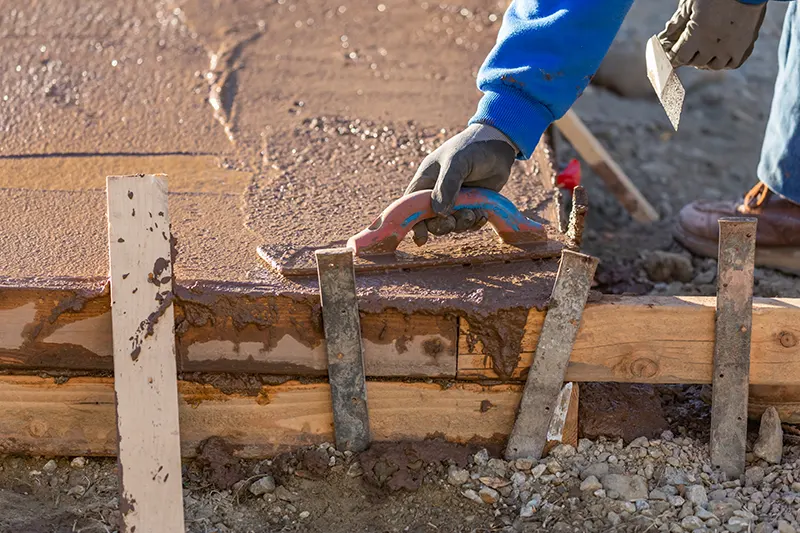
Poured stamped concrete is an engineered, continuous monolithic slab poured with certified 4,000 PSI ready-mix concrete and reinforced with steel rebar grids. While the concrete is in its plastic state, master artisans apply integral color pigments, antique release agents, and flexible texture stamping mats to imprint authentic patterns replicating natural flagstone, quarried slate, European cobblestone, or weathered timber planks. The surface is then cut with contraction joints and sealed with protective acrylic coatings.
Understanding Interlocking Paver Systems
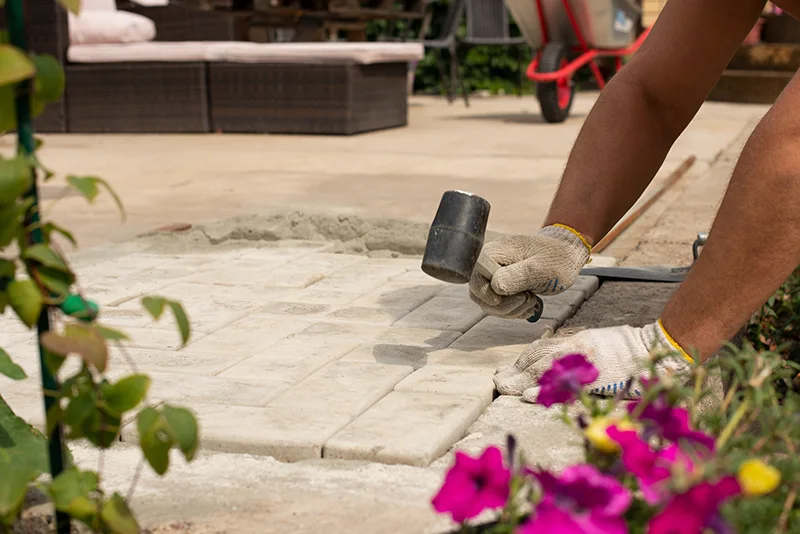
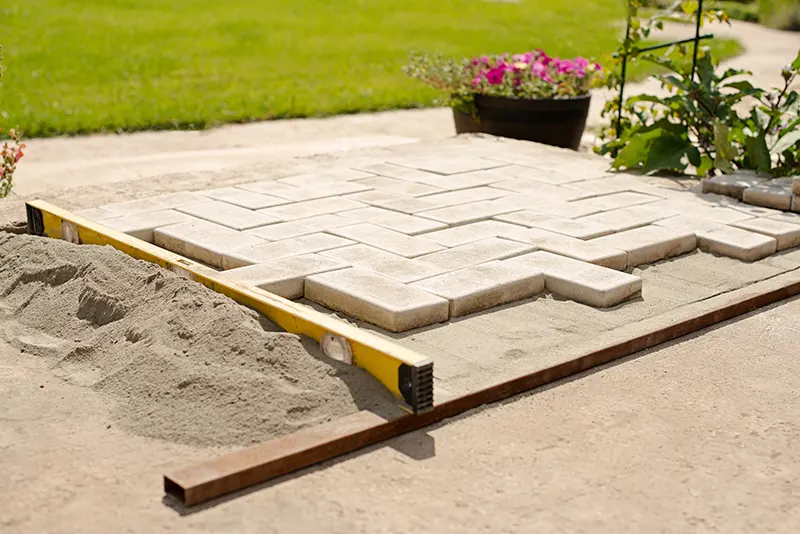
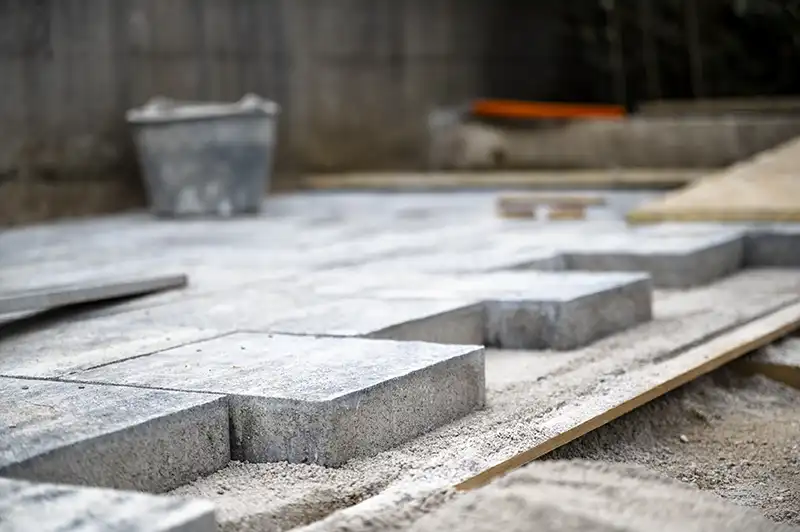
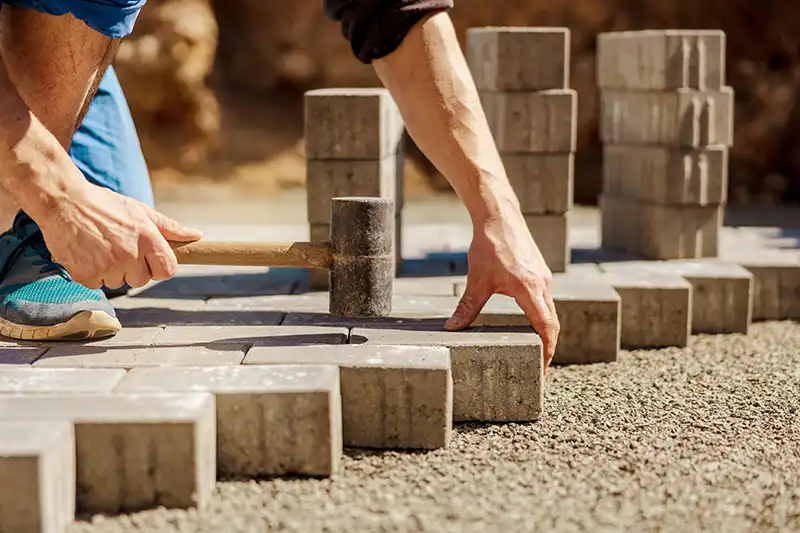
Interlocking pavers consist of individual dry-cast concrete, clay brick, or natural stone units laid by hand over a bed of bedding sand and compacted aggregate base. The joints between individual pavers are filled with polymeric sand that binds the units through friction. Paver installations offer distinct visual appeal and modular flexibility, but they rely entirely on thousands of individual joints to maintain alignment.
Head-to-Head Comparison: Stamped Concrete vs. Pavers
To determine which material best suits your outdoor lifestyle, evaluate how they compare across key functional categories:
1. Structural Stability and Shifting
Because stamped concrete is poured as a single continuous monolithic slab reinforced with steel rebar, it will not shift, wobble, or heave under heavy traffic or soil movement. In contrast, interlocking pavers consist of thousands of independent blocks. In North Georgia's expansive red clay soil, heavy downpours and settling subgrades can cause individual pavers to sink, create uneven trip edges, and require labor-intensive resetting.
2. Weed Growth and Pest Infiltration
One of the primary frustrations homeowners experience with pavers is weeds, grass, and moss sprouting between sand joints, as well as ants tunneling beneath the surface. Stamped concrete features a continuous solid surface with zero open soil joints, completely eliminating weed growth and insect tunneling.
3. Upfront Installation Cost
Installing pavers requires intensive manual labor to lay each stone individually, making paver installations typically 30% to 50% more expensive than poured stamped concrete. Stamped concrete delivers the high-end appearance of natural stone or cobblestone at a significantly more accessible price point.
4. Repairability
Pavers hold an advantage when it comes to underground utility repairs. If an irrigation pipe bursts beneath a paver patio, individual stones can be lifted, the pipe repaired, and the pavers reinstalled. Repairing concrete requires saw-cutting and patching, though quality installations rarely require subgrade excavation.
Ideal Applications for Stamped Concrete
Stamped concrete is especially well-suited for high-traffic outdoor living spaces, including an expansive backyard concrete patio designed for outdoor dining and family entertainment. Furthermore, stamped concrete is ideal for a resort-style concrete pool deck, where a continuous, seamless surface provides safe barefoot walking without weeds or loose sand washing into swimming pool filters.
Adherence to Professional Industry Standards
BigCreek Concrete Alpharetta strictly observes the technical standards and workmanship guidelines established by the American Society of Concrete Contractors (ASCC). Our decorative concrete installers are trained in proper slump control, imprint depth consistency, and sealer chemistry to ensure a durable, beautiful finish.
Maintenance and Long-Term Care
Both surfaces require basic routine maintenance to preserve their beauty. Stamped concrete should be cleaned periodically and resealed every two to three years with breathable acrylic sealers to protect vibrant colors against UV fading and food stains. Pavers require periodic power-washing, polymeric sand replenishment, and weed management.
Frequently Asked Questions

Schedule Your Hardscaping Consultation in Alpharetta
Discover how custom stamped concrete can elevate your outdoor living space. Contact BigCreek Concrete Alpharetta today. Visit us at 3200 Webb Bridge Rd, Alpharetta, GA 30005, United States, or call +16785786829 to schedule your free on-site design consultation.